

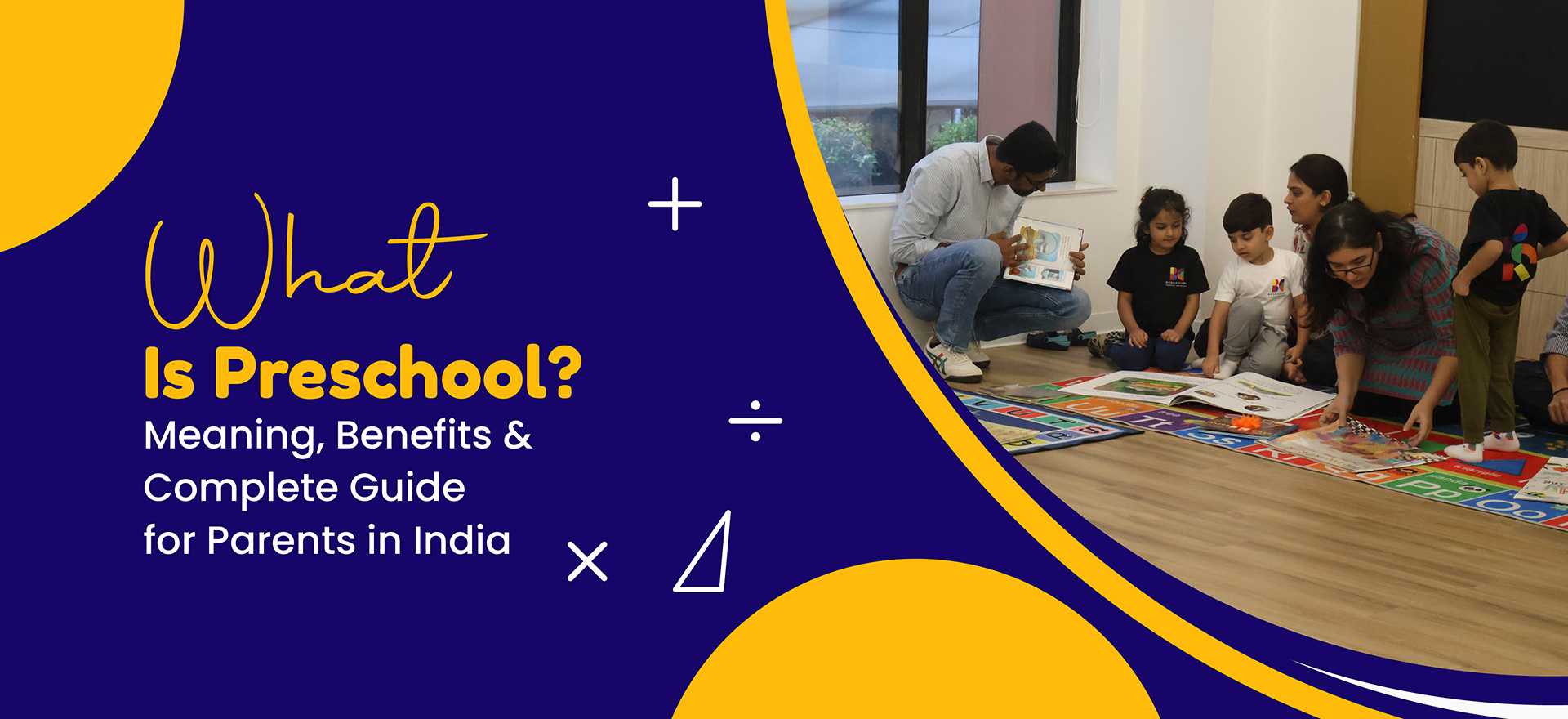
The process of selecting the correct start point for your child's educational journey can be an extremely difficult decision. Parents frequently have one question that they ask concerning this issue: What is preschool? Does my child even require a preschool program? The preschool experience is usually the very first organized academic or "learning" experience that a child will encounter away from his/her family. Preschool serves as a vital factor in early developmental stages of a young individual, and also provides opportunities to develop important social skills that help prepare him or her for the structure of formalized school systems.
In today's society where awareness regarding early childhood education is growing rapidly, there are many parents in India now choosing to enroll their children in private preschool programs such as Bees & Cubs. These private preschool programs offer a variety of different choices when it comes to providing young people with a healthy balance of learning, socialization, and nurturing; all within an inviting atmosphere. This blog provides you with a comprehensive overview of what you should know including definitions, types of preschool programs available, advantages of enrolling your child in a preschool program, and information on how to select the best preschool for your child.
Preschool is early childhood education that focuses on a child’s overall development using both play-based activities and activity-based learning methods, instead of focusing only on basic academics.
In contrast to traditional schooling, preschool programs are focused on:
This educational approach serves as a transition point from a child’s home life to their first experience in formal schooling.
Research has shown that attending preschool significantly helps support the early stages of a child’s cognitive development. Children who attended preschool had higher levels of academic achievement as well as social growth into adulthood.
Children will build problem solving skills, increase memory and begin developing some of their earliest forms of thought processes by way of using games/puzzles and participating in various structured activities.
Preschool helps children:
Storytelling, rhyming and talking help children learn new words, listen better and communicate their own thoughts.
Drawing, walking/running and playing are some ways that preschoolers can use their small (fine) and large (gross) muscles.
Children learn to:
Learn more in our detailed guide: Why Preschool Is Important for a Child: Benefits for Early Learning and Development
Preschool focuses on overall development rather than just academics.
There is a wide range of preschool options available in India for the many different types of parents.
Preschools where children are encouraged to "play" with materials such as toys, art supplies, music instruments, etc. The idea behind this type of preschool is that young children learn best when they have fun and do not feel pressured.
Child-led education using hands-on materials to encourage independent learning.
Structured programs designed to prepare preschoolers for school or other formal educational settings.
For working parents who need both child-care services and preschool services. Many modern preschools in India, including Bees & Cubs, incorporate elements from multiple philosophies into one comprehensive preschool program.
Understanding teaching methods helps parents choose the right fit.
| Method | Focus | Best For |
|---|---|---|
| Montessori | Independence | Self-paced learners |
| Reggio Emilia | Creativity | Curious, expressive kids |
| Waldorf | Imagination | Holistic development |
| Playway | Fun learning | All-round development |
Many parents confuse these terms.
| Level | Focus |
|---|---|
| Preschool | Overall development |
| Nursery | Basic academics |
| LKG | Pre-writing & reading |
| UKG | School readiness |
| Feature | Preschool | Daycare |
|---|---|---|
| Purpose | Learning | Childcare |
| Duration | 2–4 hours | Full day |
| Focus | Education | Supervision |
| Structure | Curriculum-based | Flexible |
Choose preschool for learning and daycare if you need extended care.
Selecting the right preschool is one of the most important decisions.
Trusted preschool brands such as Bees & Cubs will typically offer both structure within the program, as well as a nurturing environment, to allow you to be even more confident that you have made an excellent decision.
Starting preschool can be a big transition.
It’s normal for children to feel anxious initially.
Most children adjust within a few weeks.
While preschool is not mandatory in India, it offers significant advantages.
However, a nurturing home environment can also support early learning. The ideal approach often combines both.
Parents play a crucial role in reinforcing learning.
Children who attend preschool often:
No, but it is highly recommended.
Preschool focuses on education, while daycare provides childcare.
Typically 2–4 hours.
Basic communication, following simple instructions, and some independence.
This is normal and usually temporary. Consistency helps children adjust.
Preschool is about more than simply providing a safe environment for young children to be while their parents are at work. It is an opportunity for them to discover how the world works. For them to form close and lasting bonds with others. And for them to start developing many of the critical skills that will help them succeed throughout their lives.
The choice you make when choosing a preschool whether it is a local center or a nationally recognized name such as Bees & Cubs has a significant impact on your child's overall development. Your focus should be on your child and not what everyone else thinks you should do. Having a successful early learning experience sets the stage for a lifetime of success.

