

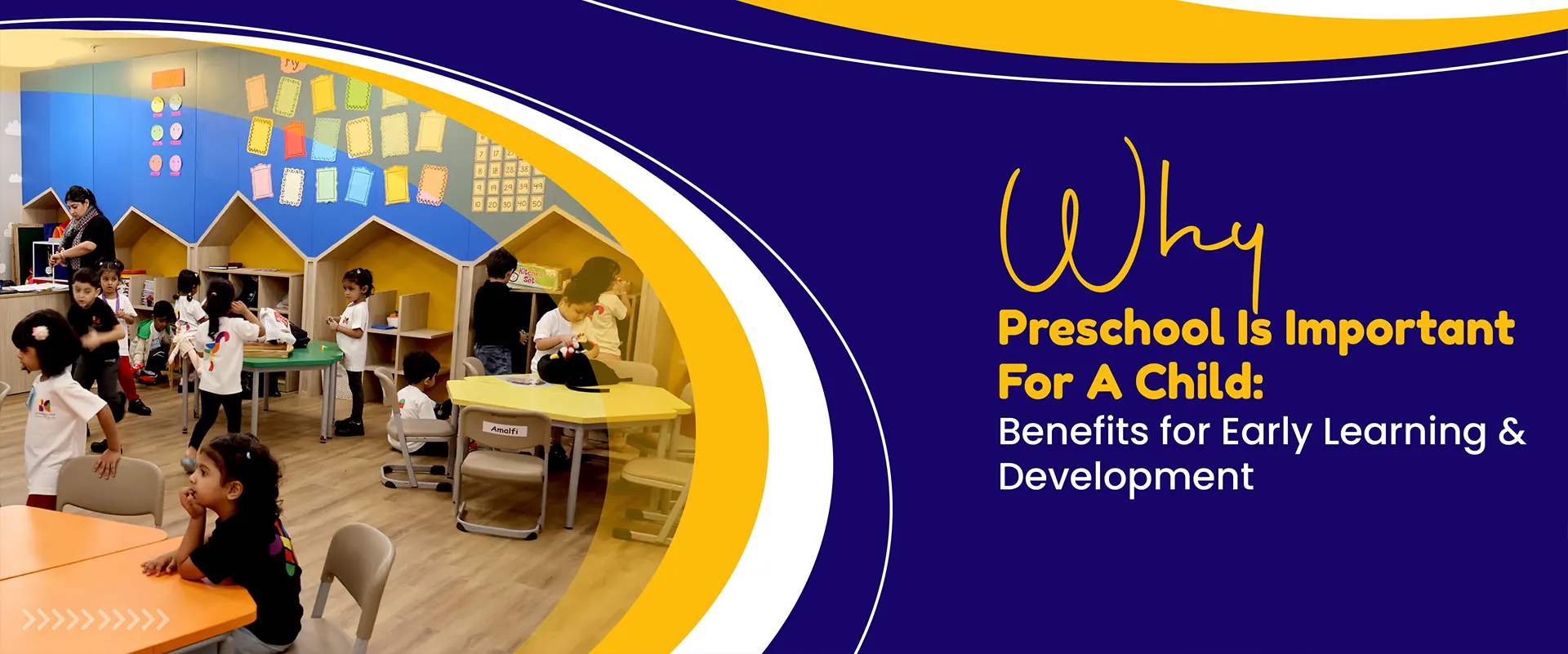
Preschool provides the foundation for a child's future educational experiences. For most children, preschool will be their first organized educational experience. The main purpose of preschool is to support the early years of development in terms of a child's social, emotional and cognitive development during these years.
During this developmental phase, children begin to expand their knowledge of the world around them, develop verbal communication with others, develop independence, and acquire many other essential skills. The quality preschools promote a supportive environment that fosters curiosity, creativity, and confidence by providing the opportunity for children to learn and grow through both exploratory (play-based) and directed learning experiences.
Institutions that operate preschool programs, such as Bees & Cubs recognize that a young child's education encompasses far more than the acquisition of basic academic skills; rather, it is to help prepare young children for all aspects of their lives. Preschool helps children benefit from enhanced socialization skills, greater emotional awareness, earlier cognitive development, independence, and readiness for formal schooling.
Preschool is an early childhood educational program which supports preschool-aged children prior to entry into formal schooling. Most preschool programs serve children from age 2 through to age 5.
Preschool's objective is to provide a positive experience for the child to encourage their total development through play and group settings, but with some structure, to prepare them for future school experiences.
While daycare is meant to offer supervision and care for children whose parents are working, preschool is known for its structured learning and developmental tactics.
It follows organized activities and learning methods that comprise social interaction, creativity, and basic academic skills, enabling holistic growth in children.
Children in preschool indulge in activities that support their development, like:
These experiences help children gauge vital skills in a joyful and stimulating environment.
Children ingrain social skills via interaction with their peers during the preschool phase. They learn to be cooperative, to share, to take turns and to communicate effectively.
Children begin to develop emotional intelligence as young children in preschool. Young children will begin to have an understanding and management of their own emotions in addition to learning about patience, developing empathy and learning to follow routines that provide a feeling of safety.
Preschool activities are used in developing young children's listening and speaking abilities skills through conversation, storytelling, and singing, while also boosting their vocabulary.
Since children are curious by nature, they learn new things at an accelerated rate when given the chance to explore. They develop early cognitive skills via puzzle play, exploration activities, and problem solving.
The development of pre-literacy and early math skills takes place through the use of letter, number, and pattern recognition activities. These skills are meant to support their future academics.
Activities like drawing, cutting, and building channel fine motor skills, while running, jumping, and playing outdoors enhance gross motor development.
Through art, music, storytelling, and imaginative play, children learn to express themselves and explore new ideas.
Preschool encourages children to make decisions, meet basic tasks, and take charge for minimal activities, which elevates their self-assurance.
Children learn to make simple choices and resolve small conflicts with guidance from teachers.
Preschool prepares children to enter a formal school environment through socialization of the classroom experience.
Children attending preschool have readiness for reading, writing, and math, resulting in smooth transition to primary school.
Prior exposure to group learning makes it easier for children to adapt school environments.
Since children adhere to instructions, focus on tasks, and engage in structured activities, it adds to their learning habits.
After preschool days, children are relatively more comfortable asking questions, sharing views, and participating in classroom discussions.
Parents can look for a few signs that indicates a child’s readiness:
While it’s not a compulsion, preschool hugely benefits children by supporting their early learning and development.
Between 2 and 3 year, most children begin preschool.
Definitely. It encourages shy children to build confidence and social skills via guided interactions.
Preschools play a significant role in a child's early development. It enables social, emotional and cognitive skills while supporting their curiosity and independence. Most importantly, a solid preschool base hones formal education years and the process of lifelong learning. With the appropriate support, care and learning environment, such as that which is provided by Bees & Cubs, children will grow into confident and capable learners who are prepared to investigate and learn about the world around them.
Most children start preschool between 2 and 3 years of age, as per their development.
Typically, preschool programs run for 2–4 hours per day, which is ideal for young children.
As previously stated, the major difference between daycare and preschool is the emphasis on developing young children's educational/developmental skills as opposed to providing childcare/supervision.
Children should develop basic communication skills, early literacy awareness, simple counting abilities, social interaction skills, and independence in daily activities.

